Concrete foundation installation typically involves site preparation, excavation, forming, reinforcement, concrete placement, and curing. Each stage contributes to creating a stable foundation that can properly support the structure above it.
The exact process varies according to the structure, engineered plans, applicable building requirements, soil and site conditions, and foundation design. In Cheyenne, Wyoming, contractors must also consider drainage and changing weather conditions when planning foundation work. Understanding the general sequence helps property owners know what to expect before construction begins.
1. The Site Is Evaluated and Prepared
Foundation work begins with reviewing the project plans and conditions at the property. The location, dimensions, and elevations must be established before excavation starts.
Site access also matters. Excavation equipment, concrete delivery vehicles, materials, and crews need sufficient room to work safely and efficiently.
Preparation may include clearing vegetation, removing unsuitable material, establishing elevations, and identifying drainage concerns. Professional Concrete Foundation work depends on getting these details right before concrete arrives.
2. Excavation Creates the Foundation Area
Once the layout is established, excavation can begin.
The depth and configuration depend on the approved foundation design, structure, site conditions, and applicable requirements. Excavation creates the necessary space for footings, walls, slabs, or other foundation components shown in the plans.
Stable Support Starts Below the Concrete
Concrete needs properly prepared support beneath it. Loose, disturbed, or unsuitable material may contribute to settlement or movement if it is not addressed before construction continues.
Excavation is therefore not simply about removing soil. The supporting area must be prepared for the specific foundation being built.
3. Forms Establish the Shape and Dimensions
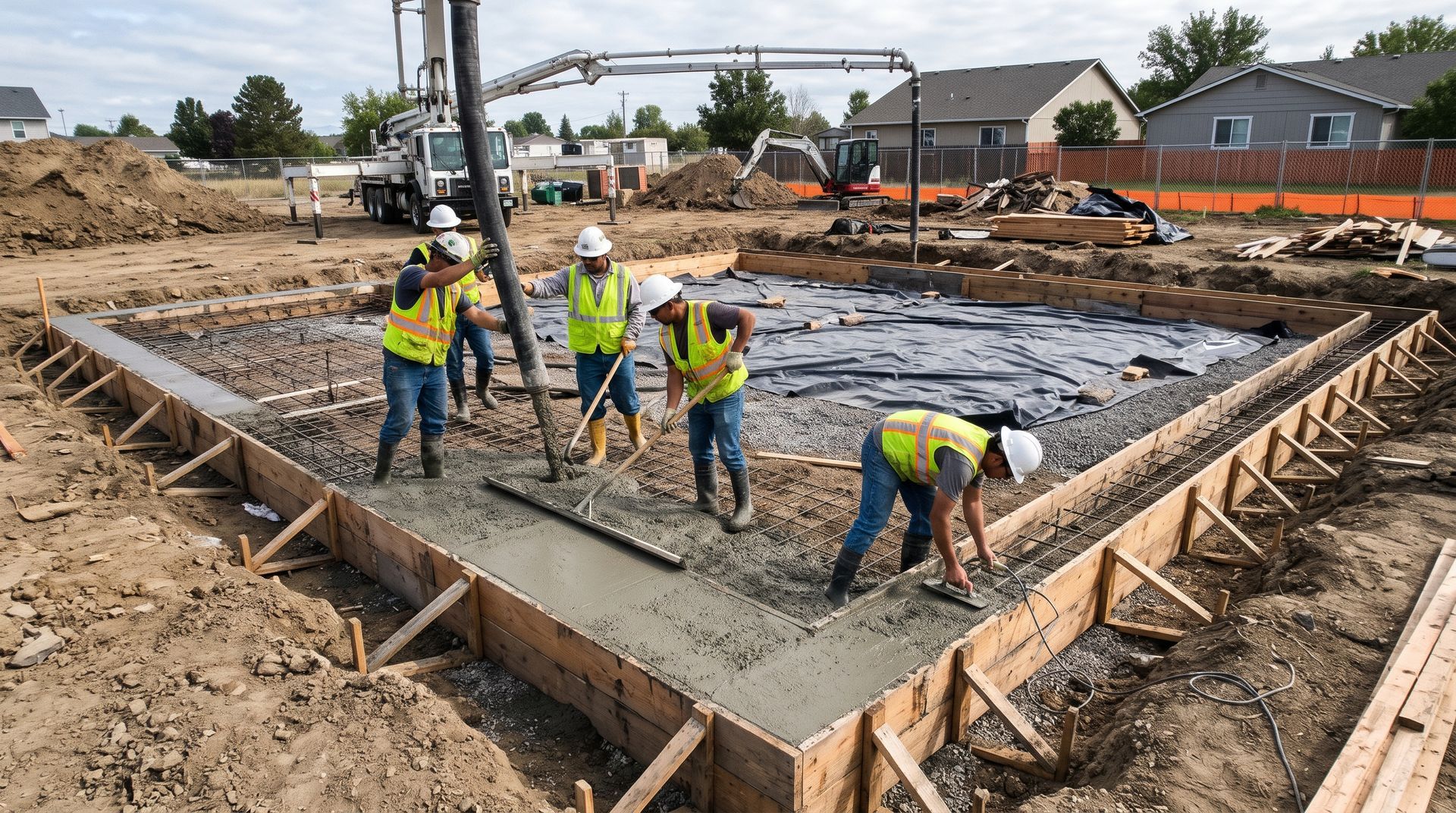
Forms hold fresh concrete in the required position while it begins to harden.
They must be correctly located, aligned, and supported because they establish important dimensions, elevations, edges, and wall locations. Contractors check the layout before placement to make sure the forms correspond with project requirements.
Planned openings, penetrations, and other embedded components also need to be considered before concrete is placed.
4. Reinforcement Is Installed as Required
Many concrete foundations use reinforcing steel or other reinforcement specified by the foundation design.
Concrete performs well under compression but is less resistant to tensile stress. Properly designed reinforcement helps the foundation resist tensile forces and manage cracking where stresses develop.
The size, spacing, position, and configuration of reinforcement depend on the plans rather than one standard approach for every foundation.
Sleeves, anchor-related components, and planned utility penetrations may also need to be positioned before concrete placement.
5. Concrete Is Placed
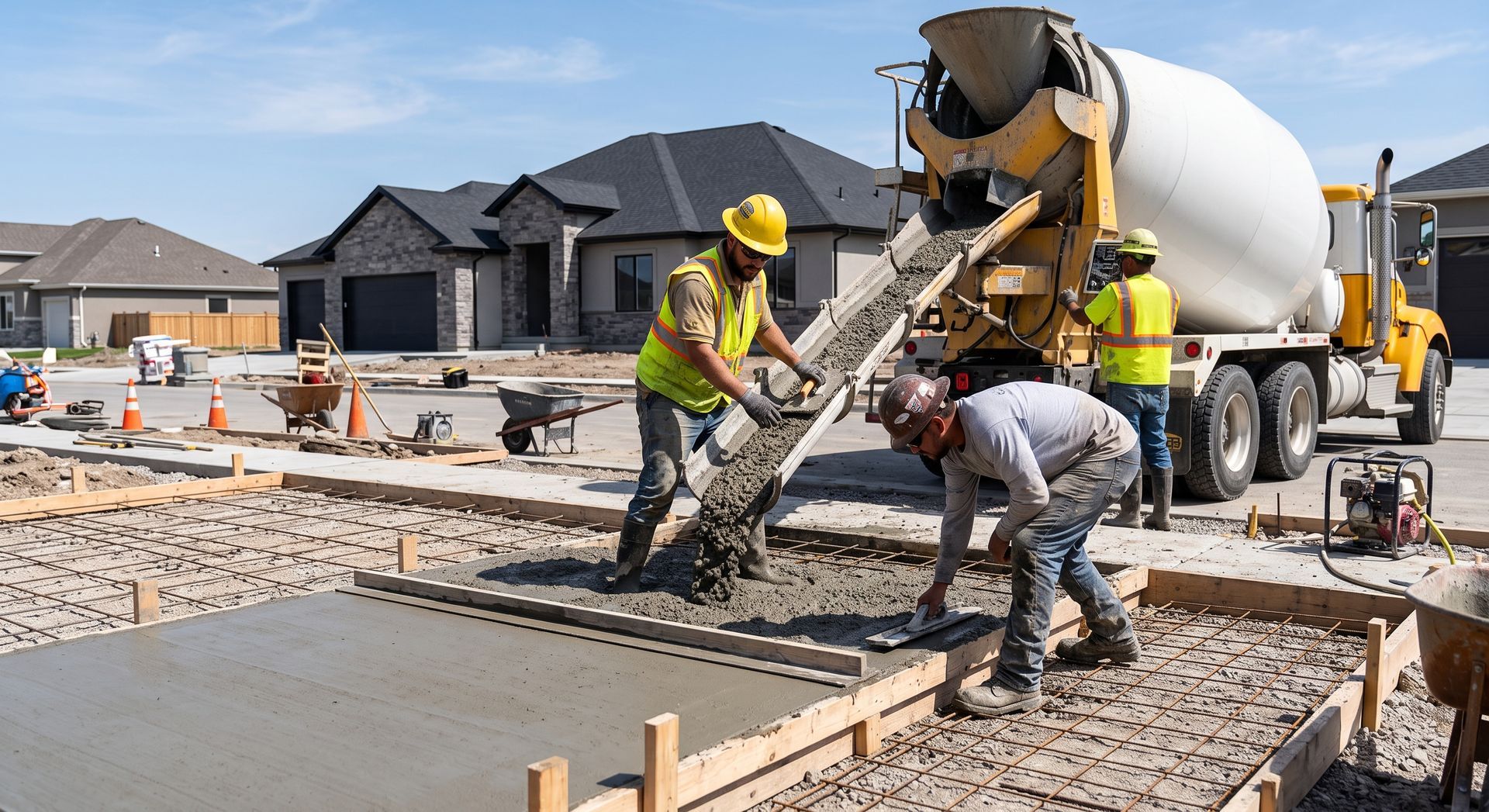
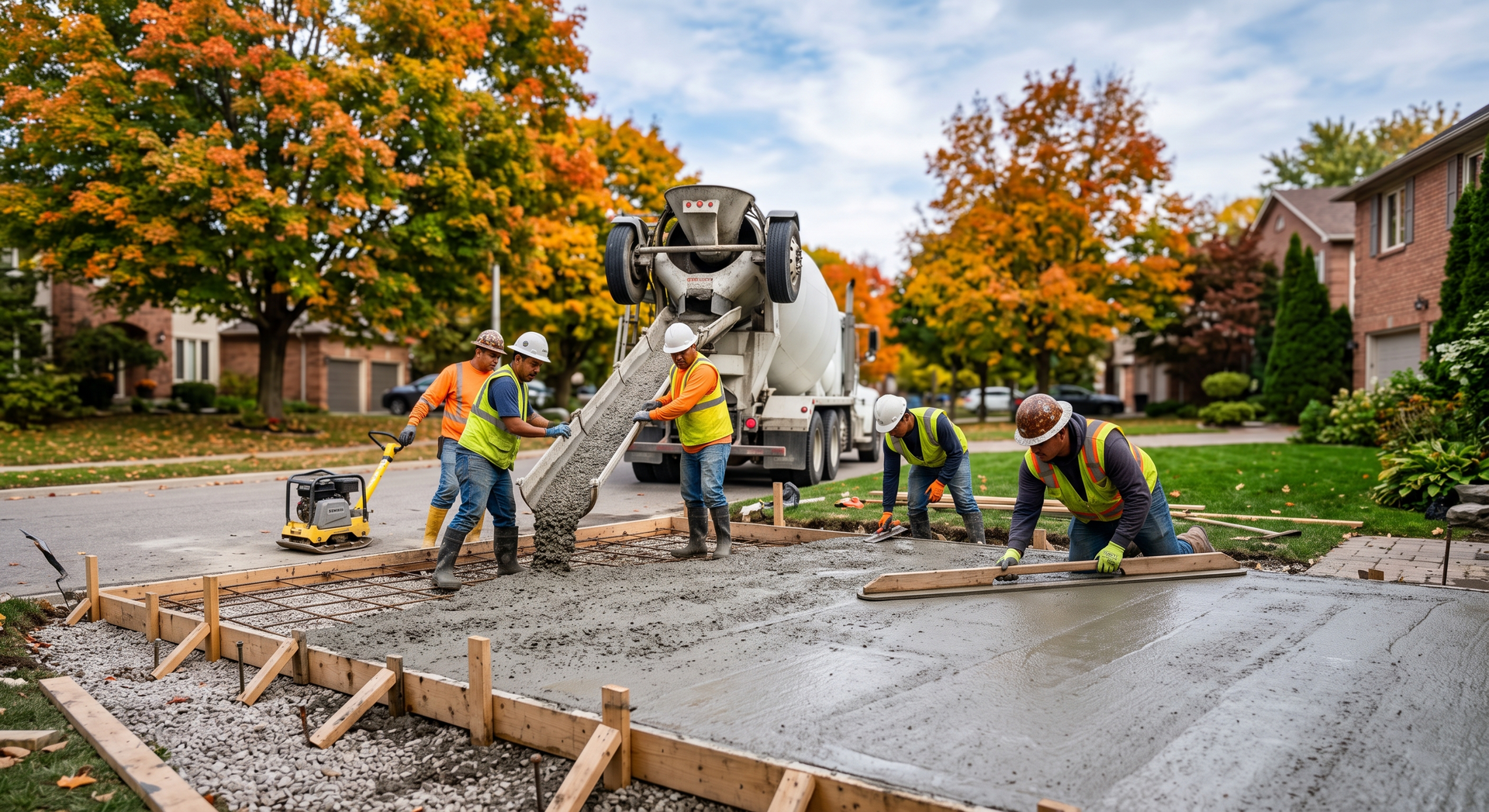
After the supporting area, forms, reinforcement, and other required components are ready, concrete placement begins.
Concrete must be placed so it fills the intended areas and properly surrounds reinforcement. Crews also work to consolidate the material and achieve specified elevations and finishes.
Weather, site access, delivery coordination, and crew preparation can influence this stage. For homeowners building a house, addition, garage, or other structure, professional Residential Concrete planning helps coordinate foundation work with the broader construction project.
6. The Concrete Is Properly Cured
Concrete does not achieve its intended properties immediately after placement. It develops strength through hydration, the chemical reaction between cement and water.
Curing helps maintain suitable moisture and temperature conditions while this process takes place. Allowing fresh concrete to lose moisture too quickly or experience unsuitable temperatures can affect its performance.
This step is particularly important around Cheyenne, where weather conditions can change substantially throughout the year. Placement and curing procedures may need to be adjusted according to conditions during construction.
7. Forms Are Removed and the Foundation Is Reviewed
Forms are removed after the concrete has developed sufficient strength for the applicable stage of work. Timing depends on the component, environmental conditions, construction sequence, and project requirements.
After form removal, the foundation can be reviewed before subsequent construction continues. Depending on the project, the next stages may include waterproofing, drainage work, backfilling, framing, or other specified activities.
How Long Does Concrete Foundation Installation Take?
There is no universal timeline for concrete foundation installation. Foundation size and design, excavation conditions, weather, required inspections, concrete placement, and curing can all affect the schedule.
It is also important to distinguish between completing the concrete placement and the concrete developing sufficient strength for later construction activities. A contractor can explain the expected sequence based on the specific plans and site.
Plan Concrete Foundation Installation in Cheyenne, WY
Successful foundation construction depends on careful work before, during, and after concrete placement. Proper site preparation, reinforcement, placement, and curing work together to create a foundation suited to the structure and property.
Miller & Sons Construction, Inc. serves Cheyenne and surrounding communities with residential and commercial concrete services. If you are planning a foundation for a new home, addition, garage, shop, or commercial structure, contact Miller & Sons Construction, Inc. to discuss your project and site requirements.